Showing posts with label UPI. Show all posts
Showing posts with label UPI. Show all posts
Andhra Pradesh Government implements dynamic UPI QR system - Telugu
దేశాన్ని డిజిటల్ సాధికారిక సమాజంగా మార్చాలనే లక్ష్యంతో, ఆంధ్రప్రదేశ్ ప్రభుత్వం రాష్ట్రవ్యాప్తంగా వారి గ్రామ సచివాలయాలు మరియు వార్డ్ సెక్రటేరియట్లలో 15,004 వద్ద చెల్లింపుల కోసం డైనమిక్ యుపిఐ క్యూఆర్ విధానాన్ని అమలు చేయడం ద్వారా డిజిటల్ చెల్లింపుల స్థలంలో భారీ పురోగతి సాధించింది. ఈ నిబంధన ఆంధ్రప్రదేశ్ పౌరుల నుండి ఛార్జీలు వసూలు చేయడానికి 500+ సేవలను అందించే 35 ప్రభుత్వ విభాగాలలో విస్తరించి ఉంది. ఒకసారి చూడు!
UPI AutoPay Launch | Global Fintech Fest
NPCI's much anticipated recurring payment solution, UPI AutoPay at the Global FinTech Fest with the world watching the event unfold. "There is a digital solution for almost every problem", says our honourable guest Shri Rajnish Kumar, Chairman - State Bank of India at the Global FinTech Fest as he spoke about how UPI AutoPay promises to change the way recurring bills, subscriptions, fees etc. are paid. Watch now!
Digital India | Four Fundamental Service Layers
Digital India | Four Fundamental Service Layers
In order to deliver citizen services online and electronically digital India has developed four fundamental services
1. Aadhaar: An online resident identity system. It enables citizens to prove who they are and where they live online. It does not demand physical presence of the individual to avail a service. Hence it is called Presence-less layer of Digital India
2. Digilocker: A cloud-based digital document management system. It enables residents to receive authenticated documents and share them with others online and electronic form. It eliminates the need for paper-based documents. Hence it is called Paper-less Layer of Digital India
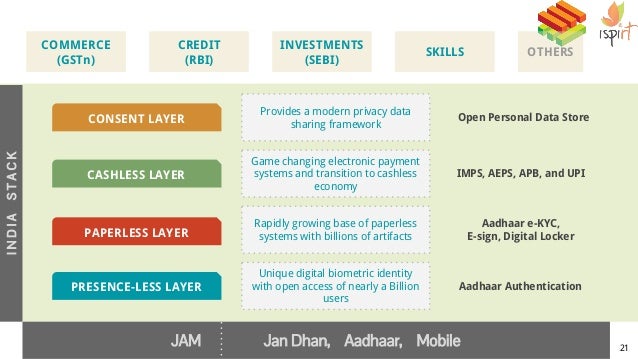
3. E-sign- Digital signature system. It enables citizens to upload document and sign them electronically. This is part of paper-less transactions. =
4. UPI- Online transaction system for making and receiving payments. This enables citizens to conduct transactions- making payments and receiving money with out physical cash . Hence it is called cashless layer
Core Service 4 - UPI Online Payment
UPI - Online Payments
DIGITAL INDIA CITIZEN CORE SERVICES:
A common person needs some basic services for the smooth conduction of his/her daily transactions. Digital India provides a set of digital India services aimed at every resident or citizen are called core services. They are (1) Digital resident identity - Aadhaar, (2) Cloud Storage - Digilocker, (3) Digital signature - e-sign, (4) Online payments- BHIM (UPI)
NEED FOR ONLINE PAYMENTS
Another important need for resident is to make online payments. Digital India has developed a platform called Unified Payment Interface (UPI). Unified Payments Interface (UPI) is an instant real-time payment system developed by National Payments Corporation of India facilitating inter-bank transactions. The interface is regulated by the Reserve Bank of India and works by instantly transferring funds between two bank accounts on a mobile platform
BHIM
BHIM (Bharat Interface for Money) is a mobile payment App developed by the National Payments Corporation of India (NPCI), based on the Unified Payments Interface (UPI) It enables fast, secure and reliable payments system that uses smartphones for cashless transactions.
UPI is open and can be used by others. Google Pay is application based on UPI.
With the help of these four digital india services, namely Aadhaar, Digilocker, e-Sign and UPI, residents can conduct most of their daily transactions. Hence they called DIGITAL INDIA CORE SERVICES.
Digital India CORE SERVICES
CORE SERVICES
A set of digital India services aimed at every resident or citizen are called core services. They are
Digital identity - Aadhaar
Cloud Storage - Digilocker
Digital signature - e-sign
Online payments- BHIM (UPI)
Digital India Four Fundamental Citizen Services
Digital India Four Fundamental Citizen Services
Citizen is at the center for Digital India project . Serving citizens online is the objective of the project. The following services ensure that most of citizen services can be delivered online
1
Aadhaar | Resident Unique Identity Number
Digital India has provided each resident a unique 12 digit number called Aadhaar. It is verifiable online and anywhere and any time. Aadhaar is a cradle to grave resident identity number. It is given to the resident after collection of demographic and biometric features and subjecting it to deduplication to establish the resident's uniqueness. As of now more than 1.3 billion Indian residents have been given Aadhaar numbers.
2
Digilocker
Digilocker is a cloud based resident document management system. It is a platform for issuance and verification of documents and certificates. A resident can create a Digilocker account and get it linked with Aadhaar number. Government documents and personal records are directly issued to resident’s Digilocker accounts. A resident can share documents with other agencies and can also e_sign them. This is the foundation for paperless citizen services.
3
e-Sign
A resident can attach a legally valid electronic signature to a document and share a signed document with others. e-Sign feature is integrated into the Digilocker system and residents can esign documents within it . This overcomes the need for wet signature
4
UPI
Unified payment interface (UPI) is a single interface to all national banks and online wallets. This enables residents to go cashless in transactions. Applications such as BHIM are built using UPI.
India Goes Digital: Digital India
1
India Goes Digital
Digital India is a great concept. Its purpose is DIGITIZING our interactions with the government. It aims to transform governance by adopting digital technologies. A digital government can deliver citizen services electronically and online.
2
Digital India Technologies
The main digital technologies deployed are cloud computing , mobile technology and the Internet .
3
Digital India Described
Digital India is a brand name denoting a series of e-governance projects undertaken by various government since the 1990s. E-governance projects in the past were undertaken in different departments and in isolation. Digital India consolidates all such projects and takes them further in unison.
4
India before Digital India
Before the advent of digital India, citizen services were brick and mortar modelled -
- paper based- ration card, marks card..
- office bound- visit office to get service/document/ticket
- Local- documents are valid locally - Gas connection
- involved physical cash -
- demanded citizen presence for availing service - senior citizen has to go to bank every year to get living certificate,
- required wet signature or thumb impression for agreements or acknowledgements.
5
Aadhaar | Resident Unique Identity Number
Digital India has provided each resident a unique 12 digit number called Aadhaar. It is verifiable online and anywhere and any time. Aadhaar is a cradle to grave resident identity number. It is given to the resident after collection of demographic and biometric features and subjecting it to deduplication to establish the resident's uniqueness. As of now more than 1.3 billion Indian residents have been given Aadhaar numbers.
6
Digilocker
Digilocker is a cloud based resident document management system. It is a platform for issuance and verification of documents and certificates. A resident can create a Digilocker account and get it linked with Aadhaar number. Government documents and personal records are directly issued to resident’s Digilocker accounts. A resident can share documents with other agencies and can also e_sign them. This is the foundation for paperless citizen services.
7
e-Sign
A resident can attach a legally valid electronic signature to a document and share a signed document with others. e-Sign feature is integrated into the Digilocker system and residents can esign documents within it . This overcomes the need for wet signature
8
UPI
Unified payment interface (UPI) is a single interface to all national banks and online wallets. This enables residents to go cashless in transactions. Applications such as BHIM are built using UPI.
India becomes Digital India
Using the above fundamental services, citizen services are delivered electronically and online.
10
Service Layers of Digital India
On digital India platform , each of the above systems is built and operated as a seperate layer. These layers are called 1. Presence-less layer, 2. Paperless layer, 3. Cashless layer and 4. Consent layer
11
Digital India citizen services are presenceless
The presenceless layer is an online resident identity system using Aadhaar number and biometrics. This is called presence-less because a resident can prove his/her identity online.
Digital India has provided each resident a unique 12 digit number called Aadhaar. It is verifiable online and anywhere and any time. This enables resident to avail service without being present in-person.
Example: A senior citizen can get Jeevan Pramaan certificate from nearest cyber center and submit to bank online.
A resident can book an appointment in a hospital online
12
Digital India Citizen Service is Paperless
The paperless layer enables a resident record to associated one's online identity (Aadhaar) and stored on cloud storage system. Records can be shared digitally.
Example: students get their marks sheets directly to their digilocker accounts. They can share it with colleges where they seek admission
Residents can pull digital copy of Aadhaar card or driving license into their digilocker account and show it to authorities when demanded
13
Digital India transactions are Cashless
The cashless layer provides a single interface to all national banks and online wallets. This enables resident to conduct online transactions. A resident links his/her bank account with Aadhaar number and mobile number. The mobile number is used as financial address. Money can be transferred and received using this address.
Example: Government subsidies are directly transferred to beneficiary bank account using this cashless layer .
Scholarships are directly transferred to students bank account
Digital India | Citizens are empowered with Consent Layer
The consent layer aims to maintain security and control of personal data. It is a system which allows users to digitally share their data with service providers in exchange for easier access to credit, insurance and other services. When fully operational, this could bring a big change in the way businesses, individuals, services providers and others use digital data in their day-to-day operations.
Cashless India: How UPI is going to Change our Life?
Digital India transactions are Cashless
The cashless layer provides a single interface to all national banks and online wallets. This enables residents to conduct online transactions. A resident links his/her bank account with Aadhaar number and mobile number. The mobile number is used as a financial address. Money can be transferred and received using this address.
Example: Government subsidies are directly transferred to beneficiary bank account using this cashless layer .
Scholarships are directly transferred to students bank account
UPI
Unified payment interface (UPI) is a single interface to all national banks and online wallets. This enables residents to go cashless in transactions. Applications such as BHIM are built using UPI. Unified Payments Interface is an instant real-time payment system developed by National Payments Corporation of India facilitating inter-bank transactions. The interface is regulated by the Reserve Bank of India and works by instantly transferring funds between two bank accounts on a mobile platform

BHIM
BHIM is an Indian mobile payment App developed by the National Payments Corporation of India, based on the Unified Payments Interface. It is intended to facilitate e-payments directly through banks and drive towards cashless transactions. The app supports all Indian banks which use UPI, which is built over the Immediate Payment Service (IMPS) infrastructure and allows the user to instantly transfer money between bank accounts of any two parties. It can be used on all mobile devices.

It is very heartening to note that globally known Google uses UPI for its popular product Google Pay
Subscribe to:
Posts (Atom)